

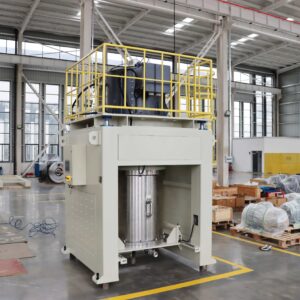
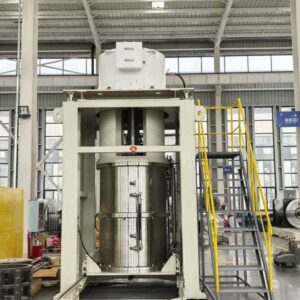
Vertical Bead Mill (SM-VR)
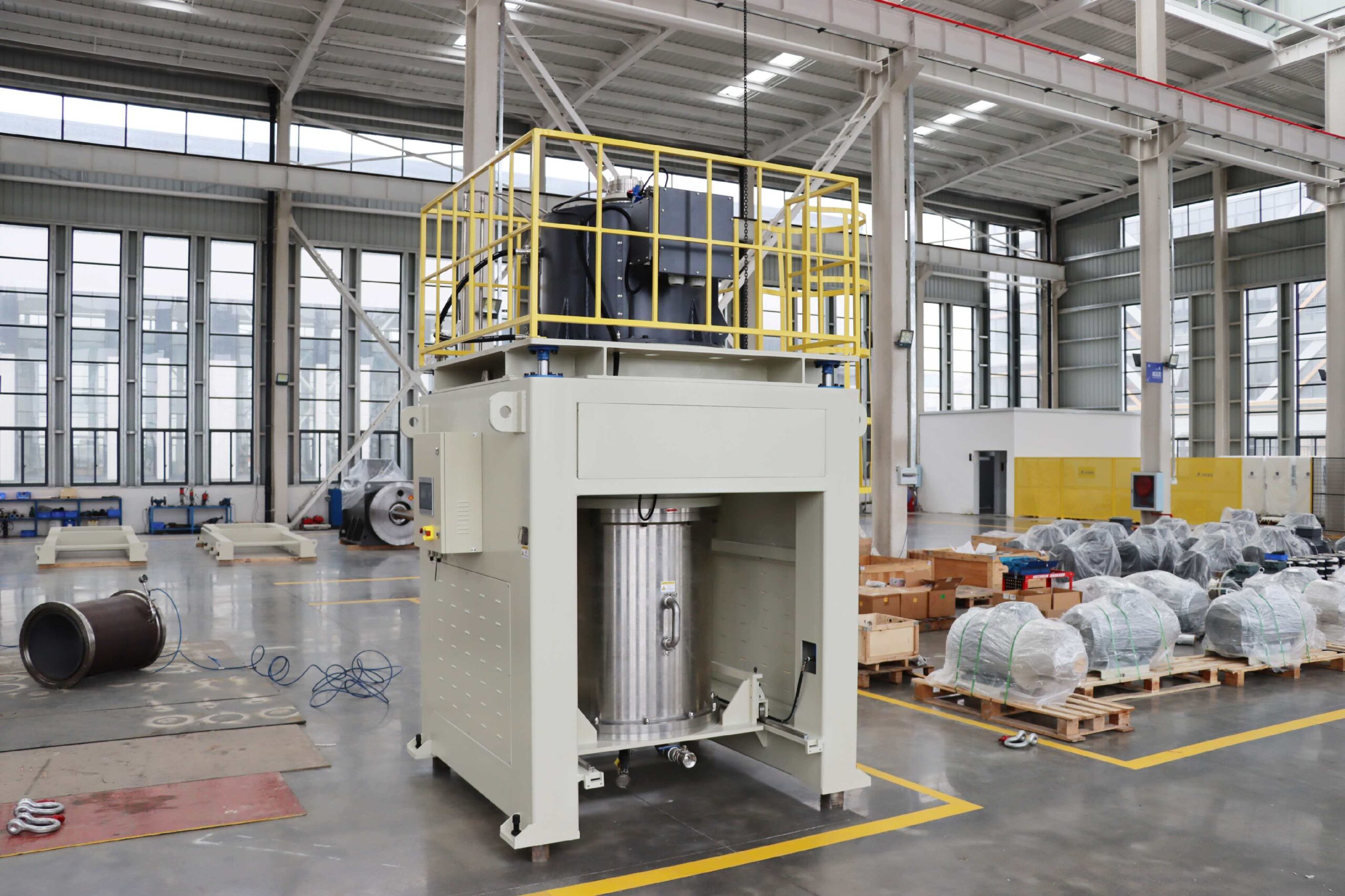
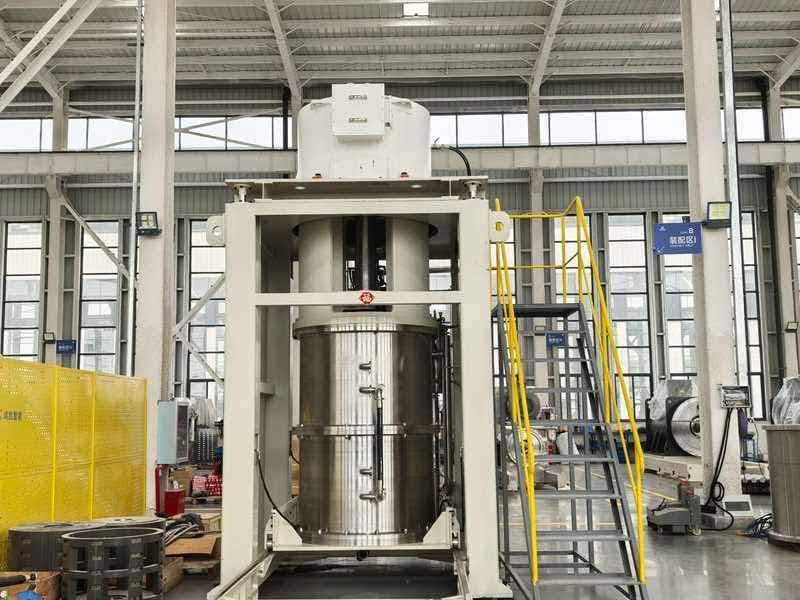
Vertical sand mills are highly efficient wet grinding and dispersing equipment widely used in industries such as coatings, inks, dyes, pesticides, electronic pastes, and cosmetics.
Its core function is to grind solid particles in a liquid medium to a fineness of microns or even nanometers, achieving uniform dispersion.
Simple structure and low cost: Initial investment and maintenance costs are typically lower than horizontal models of the same specifications.
High sealing reliability: The top seal is in good working condition, with a low risk of leakage and long maintenance intervals.
Easy operation and maintenance: Opening the cover, adding and cleaning the medium is very convenient.
No “air resistance” problem: Material flow is coordinated with gravity, resulting in smooth discharge and stable operation.
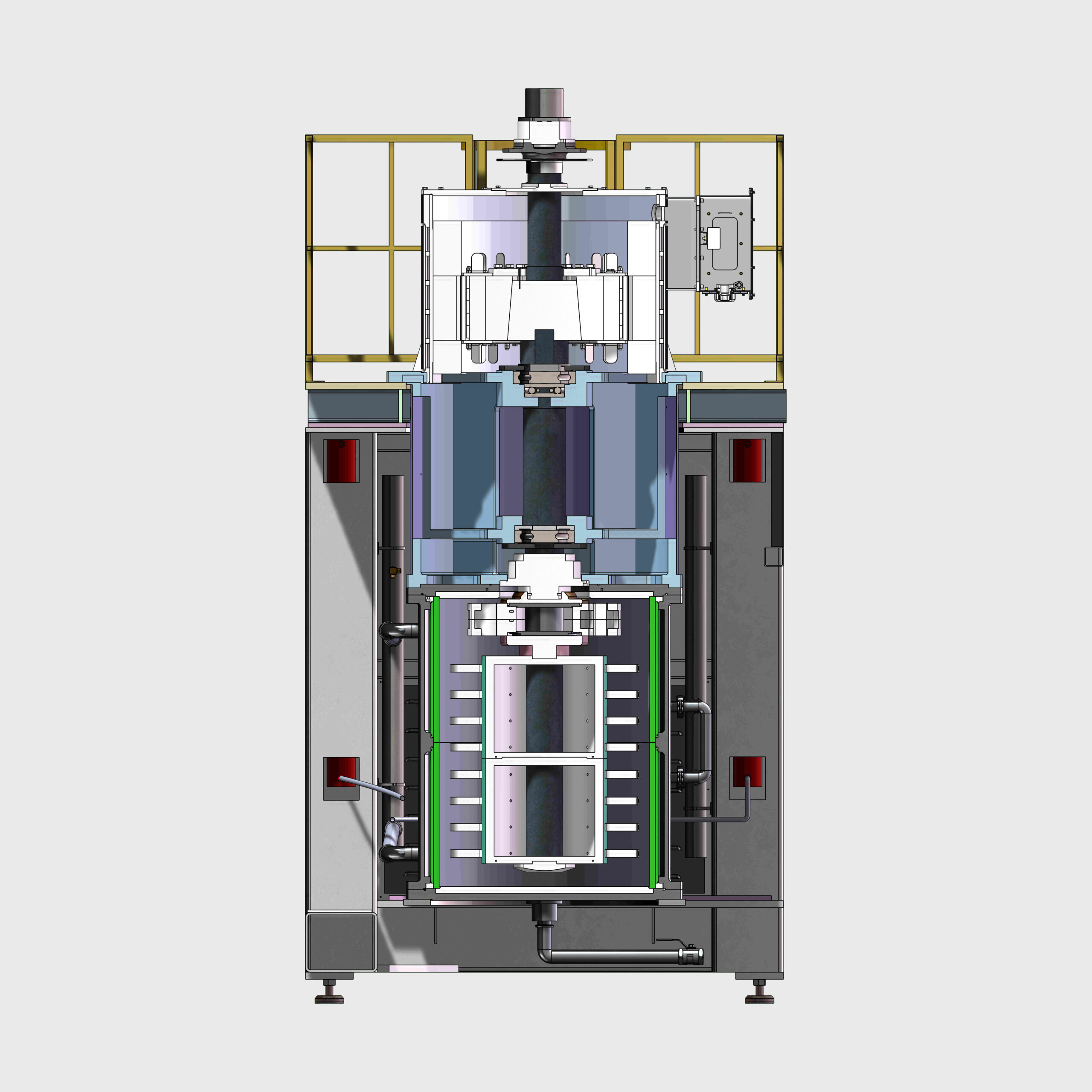
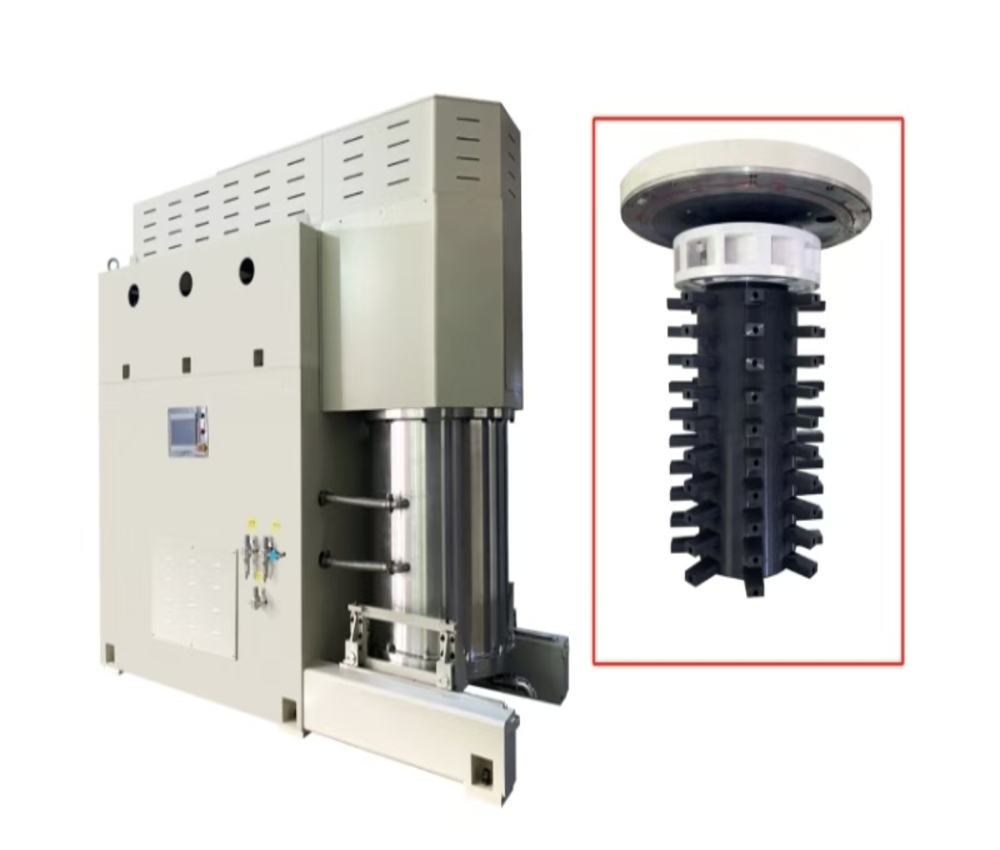
Vertical grinding mills primarily operate on the principle of “a stirring shaft driving the grinding media at high speed, generating shearing, compressing, and impact forces.”
Grinding Zone: Inside the grinding drum containing grinding media (such as zirconia beads), a motor-driven spindle rotates a dispersing disc (or pin) at high speed.
Force Action: The rotating dispersing disc causes the grinding media to move violently, generating extremely high shearing and impact forces between the media.
Material Handling: Premixed slurry (material and liquid media) is pumped into the grinding drum from the bottom by a feed pump. During the upward movement of the slurry, solid particles are repeatedly sheared, impacted, and compressed by the moving grinding media, thus being crushed and dispersed. Material meeting the required fineness flows out through the top separation device (screen or slotted dynamic separator), while particles that do not meet the required fineness remain inside the drum for further grinding.
Grinding Process: The slurry moves from bottom to top within the drum, undergoing repeated action by the grinding media. The spindle speed, material flow rate, media type, and filling rate collectively determine the grinding intensity and residence time.
Discharge and Separation: After grinding, the slurry reaches the top of the cylinder. A separation device effectively blocks the grinding media within the grinding chamber, allowing only the slurry with the required fineness to flow out and enter the finished product container or proceed to the next grinding process.
 EN
EN  ES
ES  PT
PT  FR
FR  JA
JA  KO
KO