
Step 1: Raw Material Preparation and Dosing
The various raw materials are precisely weighed according to the specific ink formula.
Step 2: Pre-dispersion
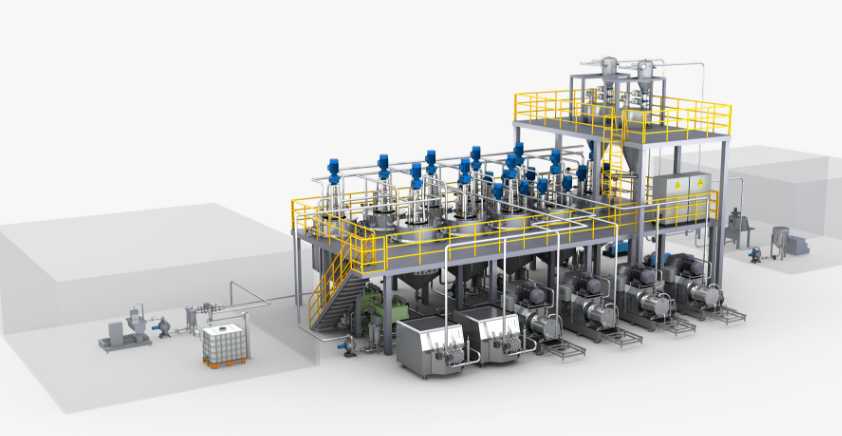
Add the heavy binder, solvent, and some additives to the mixing tank and initially mix at low speed.
Gradually add the pigment to the mixing tank. Increase the stirring speed at this point to form a high-viscosity paste. The aim of this step is to initially mix and wet the surface of the pigment particles with the binder, breaking up the pigment aggregates and preparing them for the next deep dispersion step.
Step 3: Grinding and Refining
This is the most critical step in ink production. The aim is to completely break down the pigment aggregates and stably disperse them in the binder to achieve the necessary fineness (usually at the micrometer level) to obtain vibrant colors, high gloss, and good printability.
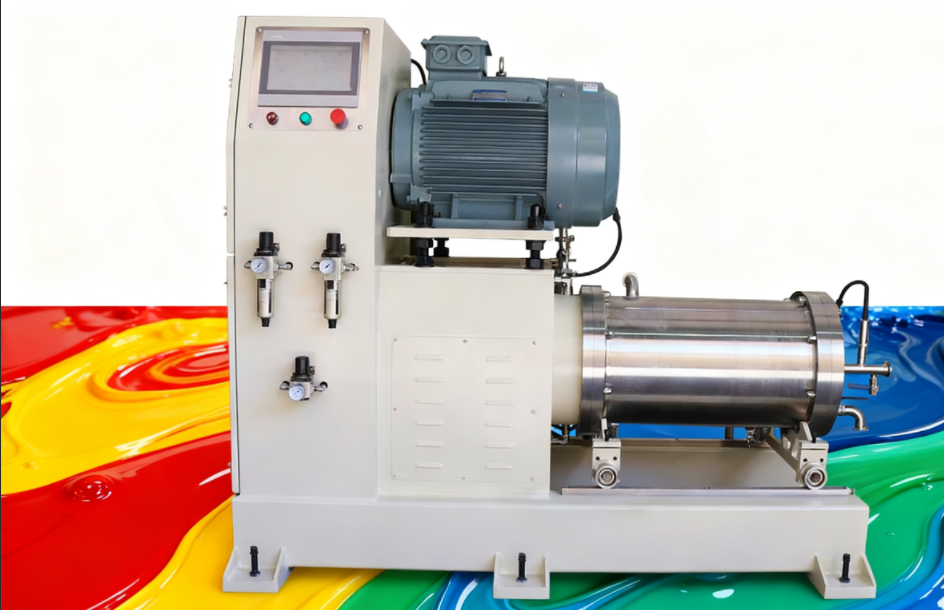
Ball Mill: Driven by high-speed rotating rotors, the balls undergo intense collisions and shear forces, grinding the pigment. This process is highly efficient and suitable for mass production, especially for water-based and solvent-based paints.
Step 4: Color Matching, Adjustment, Filtering, and Packaging
Color Matching: The base paint is transferred to the mixing tank. Based on the color code provided by the customer (e.g., Pantone number), precisely measured quantities of other colored paints or thinners are added. Fine-tuning is performed using a computerized color matching system or by experienced technicians until a perfect match is achieved.
Adjustment: The remaining additives and solvents are added to adjust the final properties of the paint.
Viscosity: Adjusted with solvents or thinners.
Drying Properties: Addition of a drying agent.
Flow and Water Resistance: Addition of appropriate additives.
Filtration: Impurities or incompletely dispersed particles that may have been introduced during production are removed using a filter or filtration machine.
Packaging: Approved paints are packaged in cans, plastic drums, or flexible packaging, labeled, and stored in the warehouse.


 EN
EN  ES
ES  PT
PT  FR
FR  JA
JA  KO
KO